Case
Machine learning gives Ringsted Forsyning fewer shutdowns and lower consumption
Ringsted Forsyning sees great potential in machine learning after trials that made the operation of the utility’s large heat pump more stable and energy efficient.
Ringsted Forsyning sees great potential in machine learning after trials that made the operation of the utility’s large heat pump more stable and energy efficient.
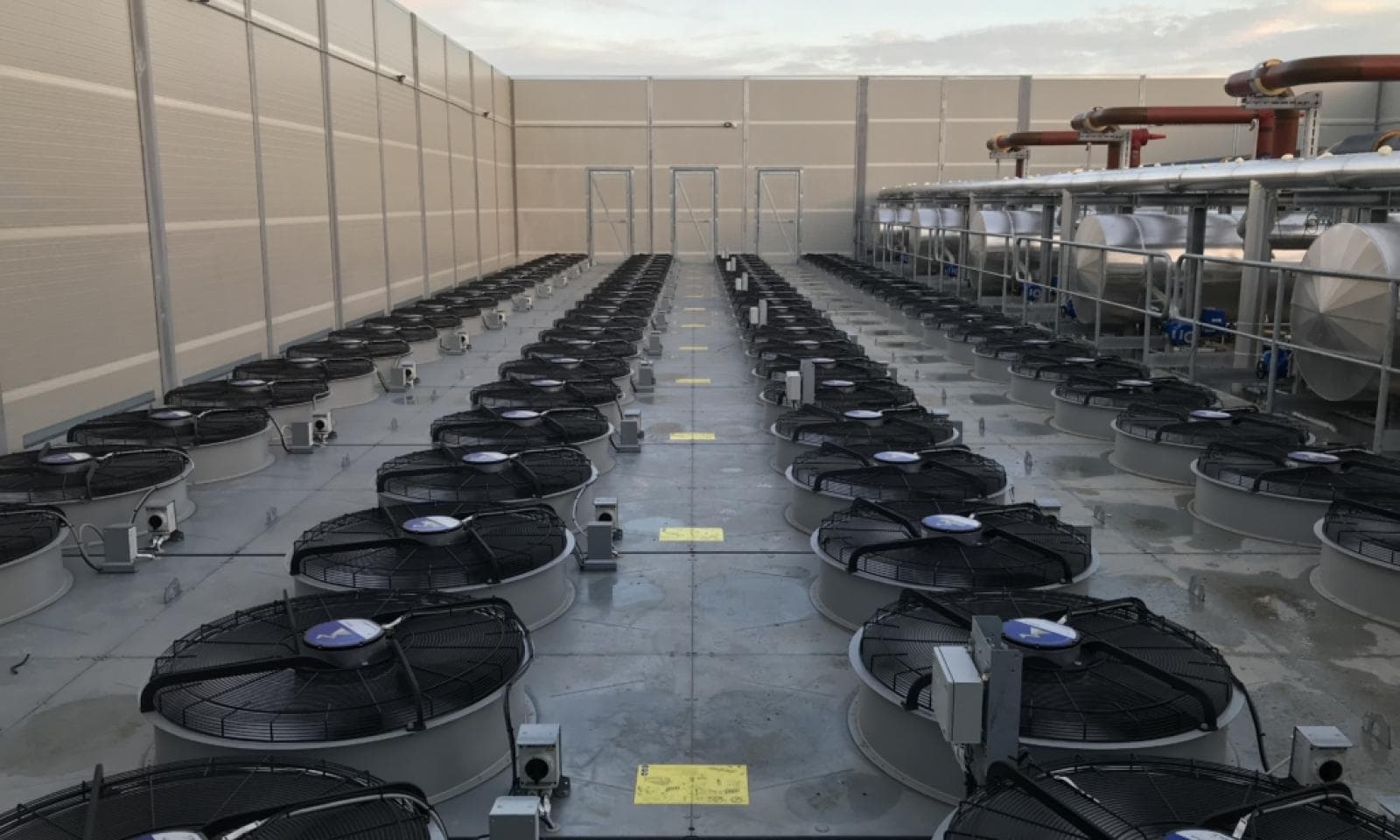
At the district heating plant in Ringsted, there is a problem during winter. Ringsted Forsyning’s large 8 MW air-to-water heat pump, which is supposed to provide affordable and climate-friendly district heating, sometimes freezes when the heat demand is highest. This leads to significant costs because other fuels must then be used to supply heat to the 4,000 customers.
The problem arises because large heat pumps can experience icing on the evaporator during the winter months. When this happens, the system must be defrosted, and if the defrosting is not carried out properly, it can lead to shutdowns, unnecessarily high electricity consumption, or increased use of other fuels.
Through the MLEEP pilot project on machine learning, Ringsted Forsyning, with assistance from Viegand Maagøe, has optimised the defrosting process of the heat pump. The results indicate both fewer shutdowns and lower energy consumption.
In the MLEEP project, a model was developed to monitor more than 60 different measurement points on the heat pump and detect deviations that may indicate icing or other issues.
The results were presented in real time to the operations managers on a simple dashboard, which they could use to better control the heat pump.
The Machine Learning for Energy and Process Optimization (MLEEP) project investigated, in 2023–25, the possibility of integrating machine learning algorithms directly into Danish industrial companies, where the technology is currently only used to a limited extent.
This was done based on the following case companies:
All of the companies are from sectors characterized by high energy consumption, but they have very different production processes and challenges in terms of development and implementation.
The starting point for MLEEP is to use data that is already available within the companies, so they do not need to invest in extensive data collection systems and meters to implement machine learning solutions.
The project is supported by ELFORSK and run by DTU Department of Chemical Engineering, BioLean, and Viegand Maagøe.
